

Originally from the Algarve, the cataplana is much more than a simple cooking utensil: it is a way of cooking Portugal. Its name refers both to the vessel itself and to the generous, fragrant and convivial recipes it is used to prepare.
Fish, clams, prawns, marinated pork, melting vegetables, olive oil, garlic, coriander, white wine… In a cataplana, ingredients cook slowly in their own steam, sealed inside their own aromas. The result is simple, spectacular and deeply flavourful cooking.
The benefits of the cataplana
The traditional cataplana is made of two half-shells joined by a hinge and closed with side clasps. This unique shape allows for gentle, even and almost magical cooking: juices circulate, aromas concentrate and textures remain delicate.
A practical and elegant utensil
The cataplana is used to prepare, cook and serve the dish. Ingredients are arranged inside, the vessel is closed, placed on the heat, then brought directly to the table. When opened, the aromas escape like a seaside kitchen in Portugal.
Healthy cooking full of flavour
Steam cooking requires very little fat. Food cooks slowly in its natural juices, preserving taste, texture and nutritional qualities. Fish stays tender, shellfish releases its juices and vegetables become beautifully soft.
Easy recipes to master
The cataplana requires no complicated technique. Simply choose good ingredients, layer them carefully, season generously, close the vessel and let it cook. No need to stir constantly: the cataplana almost cooks by itself.
A spectacular dish at the table
The great moment comes when the cataplana is opened in front of guests. Steam rises, and the aromas of garlic, olive oil, coriander, white wine and seafood fill the table. It is simple, generous and full of life: exactly the spirit of Portuguese cooking.
How to choose your cataplana?
Some will say that a wok or casserole dish can replace a cataplana. In reality, the closed, rounded shape of the cataplana is essential: it allows heat to circulate evenly and creates an enclosed space where juices and aromas move freely without escaping.
The right choice mainly depends on your cooking method: traditional copper or induction-compatible stainless steel.
The copper cataplana
 Illustration: Copper cataplana - Luisa Paixão Collection
The copper cataplana is the most traditional version. It immediately evokes Algarve kitchens, whitewashed houses, fish markets and generous family tables.
Copper is valued for its ability to conduct heat quickly and evenly. It allows for gentle, precise and aromatic cooking. Once the dish is ready, the cataplana naturally becomes a spectacular serving piece, with a warm and deeply authentic presence.
The stainless steel cataplana
 Illustration: Stainless steel cataplana - Luisa Paixão Collection
For kitchens fitted with induction hobs, the stainless steel cataplana is the best choice.
It preserves the spirit of the traditional cataplana while adapting perfectly to contemporary kitchens. Its flat base ensures good contact with the hob, its interior allows even cooking, and its polished exterior gives it a beautiful presence when served at the table.
Which size should you choose?
In Portugal, people rarely cook too little. A cataplana should allow you to serve a generous, abundant and convivial dish. No guest should leave the table wishing there had been one more serving.
I therefore recommend choosing a size slightly larger than your usual needs. A cataplana is a solid, durable utensil designed to last for years. It would be a pity to choose one that is too small and then have to limit your recipes or your guests.

A few tips for use
1 - A copper cataplana heats quickly. There is no need to push it too hard: gentle cooking is enough to achieve a delicious result.
2 - Avoid exposing an empty copper cataplana to a strong flame or placing it in the oven without contents, in order to preserve its shape.
3 - As the interior is designed for cooking food, use wooden or silicone utensils whenever possible. Avoid metal utensils, which could damage it.
4 - Clean it gently, without abrasive products. A cataplana is made to cook, live, develop a light patina over time and accompany many meals.
Classic cataplana recipes
In Portugal, there are almost as many cataplana recipes as there are cooks. The principle remains the same: good ingredients, generous seasoning, slow sealed cooking, then a spectacular opening at the moment of serving.
Here are a few simple ideas to adapt according to the market, the season and your inspiration.
Fish cataplana

- Pour a drizzle of olive oil into the bottom of the cataplana.
- Add a layer of onions, tomatoes, peppers, potatoes or sweet potatoes cut into thin slices.
- Season with salt and pepper, and add fresh coriander to taste.
- Arrange the salted fish pieces cut into portions.
- Cover with another layer of vegetables.
- Add seafood and shellfish: prawns, clams, cockles or mussels.
- Pour in a little olive oil and half a glass of water or white wine.
- Close the cataplana and cook gently for about 30 minutes, without opening before serving.
Pork and clam cataplana

A deeply Portuguese recipe, both land and sea. Marinated pork, clams, garlic, white wine and coriander create an intense, fragrant and highly convivial dish.
- Cut the pork into pieces and marinate it with white wine, crushed garlic, paprika and bay leaves for at least 2 hours.
- Finely slice the onions, parsley and coriander.
- Heat a little olive oil in the cataplana.
- Add the onions, then the garlic and bay leaves. Season with salt and pepper.
- Add the pork pieces, then the clams.
- Sprinkle with parsley and coriander, then add a little white wine.
- Close the cataplana and cook gently for about 30 minutes.
Carabineros prawn cataplana with mushrooms and rosemary
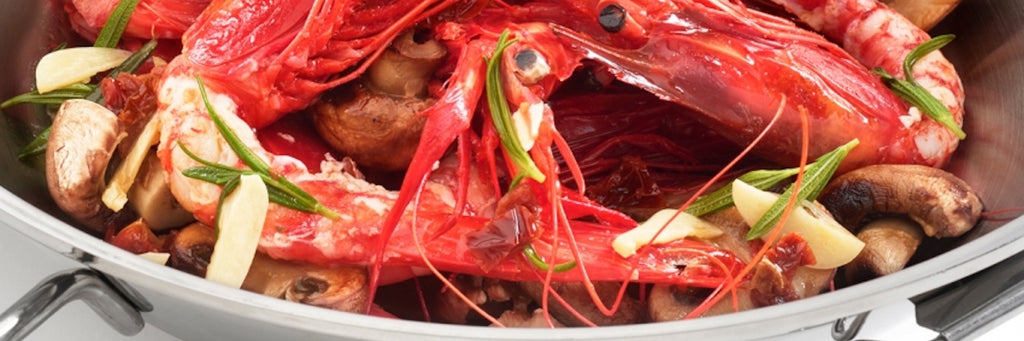
Recipe inspired by Silampos and chef Vítor Sobral.
Ingredients for 10 people
- 800 g peeled carabineros prawns, with head and tail
- 350 g brown mushrooms
- 200 g sun-dried tomatoes
- 5 garlic cloves
- 1 teaspoon rosemary
- 0.3 dl tomato vinegar
- 0.5 dl extra virgin olive oil
- Sea salt
- Pepper
Preparation
- Sauté the sun-dried tomatoes in a little olive oil, then set aside.
- Add the remaining oil to the cataplana.
- When hot, add the lightly salted prawns.
- Add the mushrooms, garlic and rosemary.
- Close the cataplana and cook gently.
- Serve with a little pepper and a few drops of tomato vinegar.
Clam cataplana with lemon

Recipe inspired by Silampos and chef Vítor Sobral.
Ingredients for 10 people
- 3 kg clams
- 400 g chopped onions
- 6 garlic cloves, chopped
- 400 g peeled tomatoes cut into quarters
- 0.5 dl lemon juice
- 1.5 dl extra virgin olive oil
- Chilli
- Chopped chives
Preparation
- Sauté the onions, garlic and tomato in olive oil.
- Add the clams, chilli and lemon juice.
- Close the cataplana and cook gently until the shellfish open.
- Serve immediately with a little chopped chive.
6 comments
Bonjour, pour les cataplana en cuivre est ce que l’on peut les utiliser sur le gaz à feu doux?
Merci
Bo jour, je reviens du Portugal et évidemment j ai goûter pour la 1er fois une cataplana dans laquelle il y avait des pomme de terre. Ma question est : dois-je laisser plus longtemps la cuisson s il y a des pomme de terre ? Merci
ola!!je viens de recevoir ma cataplana, elle est magnifique, dommage que les délais de livraison soient si long. c’est un cadeau qui devait arrivé pour noel. mais je pense que un mode d’emploi et même une petite recette aurait été un plus..j’ai du aller sur internet…et ces recettes que vous avez la bonté de diffuser, je n’arrive pas a les imprimer..dommage …mais je pense que je reviendrais quand même sur le site ou je retrouve mon ’Portugal’adoré.saudades
Bonjour Thérèse, nous indiquons les dimensions de chaque Cataplana sur sa fiche produit et faisons une estimations du nombre de convives que cela représente ce qui vous permet d’affiner votre choix.
Bonjour,
À combien de personnes la cataplana 36 cm correspond elle,
6/8 pers ou moins ou plus et à quel prix .
Merci de me renseigner
Salutations
P
Bonsoir, j ai bau coup cherchée sur internet la dimension à choisir pour l achat de cet article et tenant compte de votre article comment le choisir, je me décide pour une 5/6 personnes équivalente à 6/8 personnes.
En vous remerciant de vos Conseils dans votre article que je vais imprimer et mettre avec mes recettes portugaises que j aiment réalisées et appréciées pour ma famille et amis, amateurs de cuisine Portugaise.
Et commander de votre livre Recettes du Portugal .
En vous remerciant de vos conseils éclairés,
Recevez mes salutations.
DE WAELE Thérèse